Qué vs Cuál: When to Use Each 'What' in Spanish
Qué vs cuál confuses almost every English speaker. Learn the one test that decides it, the traps around 'es', and check yourself with a short quiz.
Nativia Team
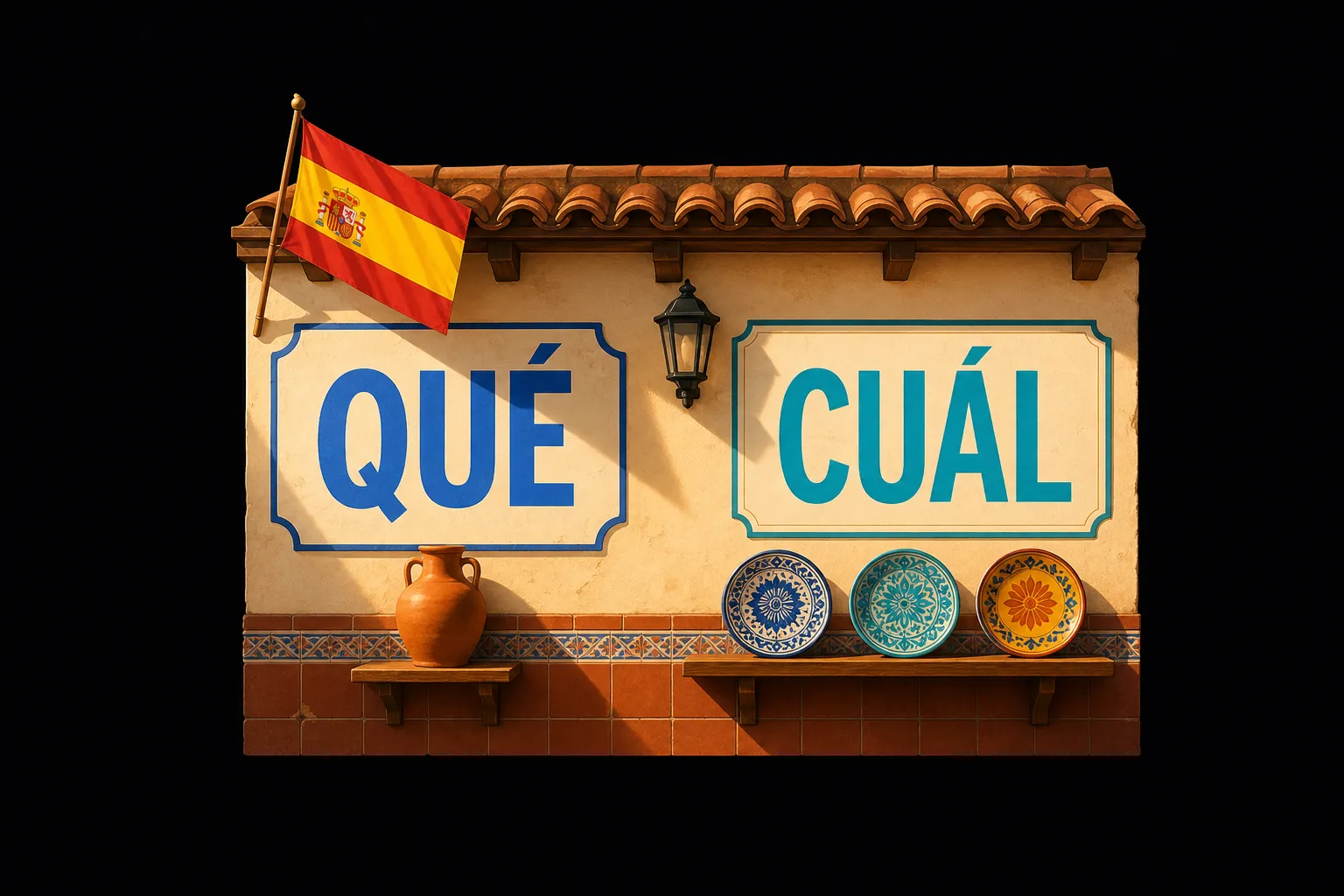
English has one word for this job: what. Spanish splits it into qué and cuál, and the split does not follow English at all. That is why "¿Qué es tu nombre?" sounds so wrong to a native ear even though it is a word for word translation.
Quiz ahead: A short quiz at the end checks whether you really own this. Question 4 catches almost everyone.Qué: asking for a definition or an open answer
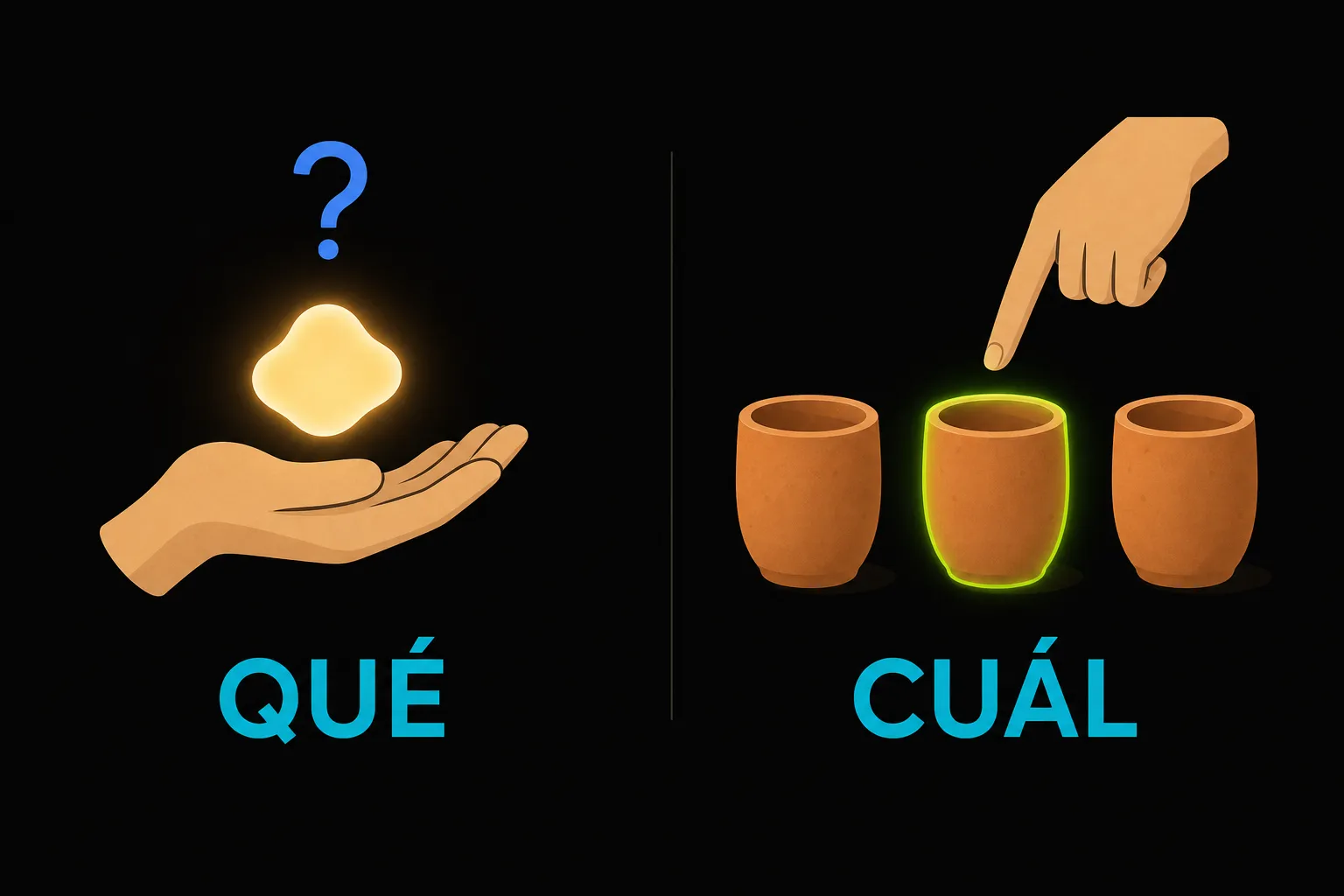
Use qué when you have no list in mind. You are asking what something is, or you are asking directly before a noun.
Rule one: qué goes right before a noun, always. English speakers get this one right by instinct because it matches "what book" or "which day."
¿Qué libro estás leyendo? (What book are you reading?) ¿Qué día llegas a Madrid? (What day do you arrive in Madrid?)
Rule two: qué before a verb asks for a definition or an explanation, not a choice.
¿Qué es el mate? (What is mate? Explain it to me.) ¿Qué haces los domingos? (What do you do on Sundays?)
Rule three: exclamations only ever take qué.
¡Qué calor! (It is so hot!)
Cuál: picking from a set
Use cuál when the answer is one item out of a group, even if the group is only in your head. The listener is expected to identify or select, not to define.
Rule one: cuál before es or son when you want a specific piece of information, not a definition. This is where most mistakes happen.
¿Cuál es tu nombre? (What is your name?) ¿Cuál es la capital de Colombia? (What is the capital of Colombia?)
Rule two: cuál de when the group is spelled out.
¿Cuál de estos vinos es más seco? (Which of these wines is drier?)
Rule three: cuál on its own or with a verb other than ser, when the options are already on the table.
Hay tres rutas. ¿Cuál prefieres? (There are three routes. Which one do you prefer?)

Reading is step one. Speaking is what makes it stick.
Practice this in a real conversation, with instant feedback.
The "es" test
The whole confusion collapses into one question: what comes after the word?
If the next word is a noun, it is qué. No exceptions in standard Spanish.
If the next word is es or son, ask yourself what kind of answer you expect. A definition means qué. A specific value, name, number, or item means cuál.
¿Qué es un pasaporte? (What is a passport? You want a definition.) ¿Cuál es tu pasaporte? (Which one is your passport? You want the item.)
Key takeaway:
- Qué goes before nouns and asks for definitions or explanations.
- Cuál goes before es/son or de and asks you to identify or pick something.
Common traps
Translating "what is your..." literally. Name, number, address, email, favorite anything: they are all cuál es. You are asking someone to pull one item from all possible names or numbers, not to define the concept of a name.
¿Cuál es tu número? (What is your number?) ¿Cuál es tu comida favorita? (What is your favorite food?)
Putting cuál before a noun. You will hear ¿Cuál libro quieres? in Mexico, Colombia, and much of Latin America, and nobody will blink. In Spain and in any exam it is wrong. Stick with qué before nouns and you are safe everywhere.
Asking for the difference. "What is the difference" is one of the most googled Spanish questions, and it takes cuál, because you want the specific difference, not a definition of the word.
¿Cuál es la diferencia entre ser y estar? (What is the difference between ser and estar?)
Don't just memorize it. Say it out loud today.
Nativia turns what you just read into real conversations.
Test yourself
Pick the right option in each sentence, then check your answers.
Choose qué or cuál in each sentence, then check your answers.
1.¿ es tu apellido?
What is your last name?
2.¿ hora es?
What time is it?
3.¿ es la paella?
What is paella?
4.A friend shows you two phones and asks which one is yours. Which question did they ask?
5.¿ de estos trenes va a Sevilla?
Which of these trains goes to Seville?
6.You are at a market and want to know what a strange fruit is. What do you ask?
Qué vs cuál at a glance
Qué vs cuál at a glance
| Situation | Word | Example |
|---|---|---|
| Directly before a noun | qué | ¿Qué libro lees? (What book are you reading?) |
| Asking for a definition or explanation | qué | ¿Qué es el mate? (What is mate?) |
| Before a verb, open question | qué | ¿Qué quieres? (What do you want?) |
| Exclamation | qué | ¡Qué frío! (It is so cold!) |
| Before es/son, asking for a specific value or item | cuál | ¿Cuál es tu nombre? (What is your name?) |
| Picking from a stated group | cuál de | ¿Cuál de estos? (Which of these?) |
| Standalone choice | cuál | Hay tres. ¿Cuál prefieres? (There are three. Which do you prefer?) |
| Name, number, address, favorite, difference | cuál es | ¿Cuál es la diferencia? (What is the difference?) |
Practice this grammar in real conversations
Rules only stick when you use them. Practice them in real conversations in Nativia and get instant grammar feedback after every message.
FAQ
Is it "qué es tu nombre" or "cuál es tu nombre"?
Cuál es tu nombre. You are asking someone to identify one name, not to explain what a name is. The same goes for number, email, address, and anything "favorite."
Can I say "cuál libro" in Spanish?
You will hear it a lot in Latin America and people will understand you fine. In Spain it sounds off, and in any textbook or exam it counts as a mistake. Qué libro works everywhere, so make it your default.
Does cuál change to cuáles?
Yes. Cuál is singular, cuáles is plural: ¿Cuáles son tus planes? (What are your plans?). Qué never changes form.
Keep reading
8 Spanish Mistakes That Instantly Mark You as a Beginner
Puedo tener un café, un otro, me gusta los tacos: 8 common Spanish mistakes that reveal you're a beginner, why they're wrong, and the fix for each.
Saber or Conocer? 7 Spanish Verb Pairs English Mixes Up
Saber vs conocer, pedir vs preguntar and five more Spanish verb pairs English speakers mix up, with fixes, memory hooks and a self test quiz.
Pretérito vs Imperfecto: When to Use Each Past Tense
Pretérito vs imperfecto explained without textbook jargon: clear rules, real examples, the traps that change meaning, plus a quiz and cheat sheet.