The Islands Method: 10 Spanish Mini-Speeches You Actually Own
Learn the language islands method for speaking Spanish: build 10 short memorized mini-speeches in 4 weeks, 20 minutes a day, and stop freezing mid-conversation.
Nativia Team
For two years I could answer ¿De dónde eres? (Where are you from?) and then nothing. The next question always found the edge of what I had ready, and I sank. My vocabulary was fine. The problem was that I had never built anything I could say from start to finish without thinking.
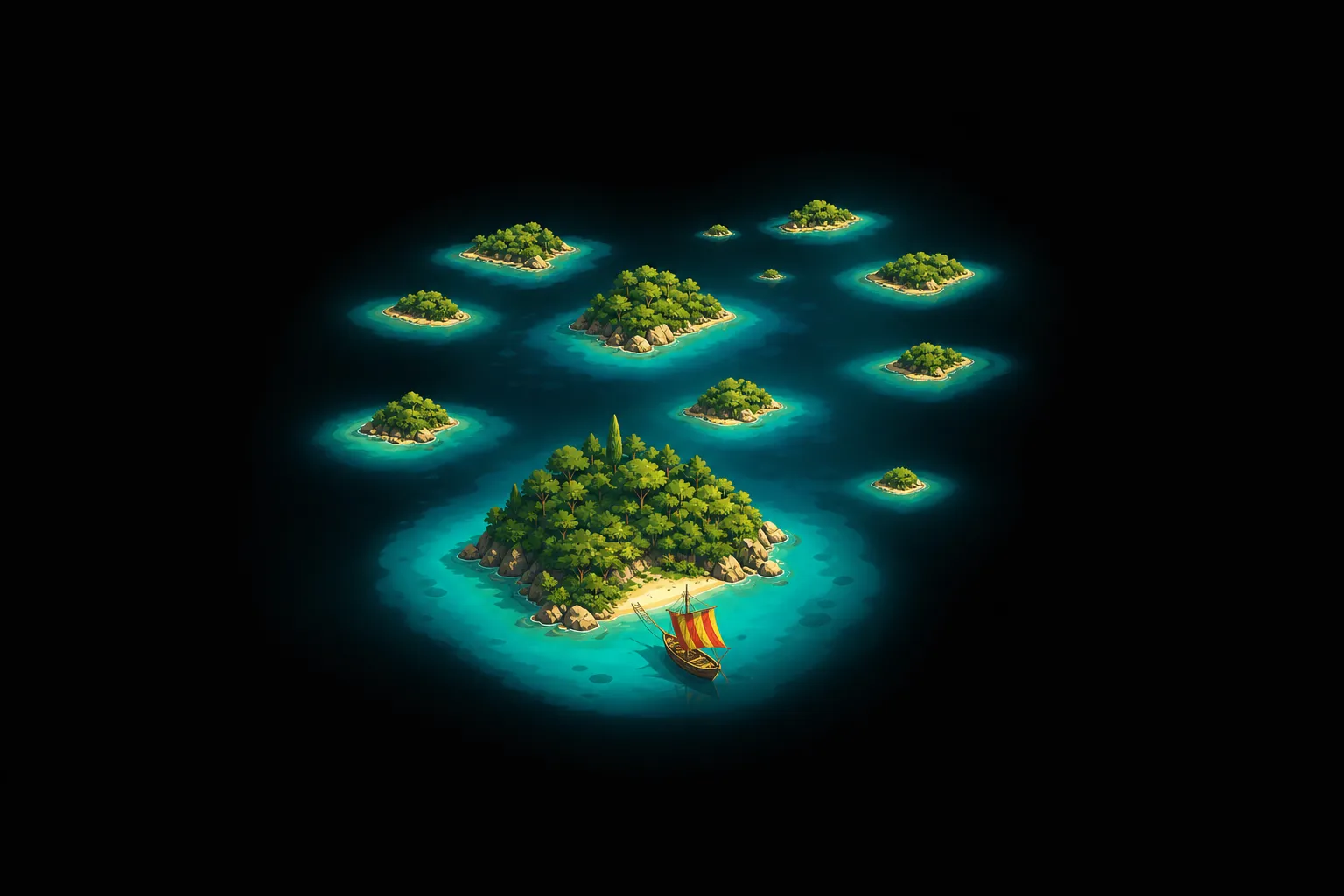
The fix came from Boris Shekhtman, a teacher who trained US diplomats. He called it language islands. You build a handful of short, memorized mini-speeches about your own life, on topics people actually ask about. When a conversation drifts into deep water, you swim to the nearest island and stand on solid ground until you catch your breath.
Quiz ahead: At the end of this article a short quiz checks whether you would build your islands the right way. Question 4 catches almost everyone.What an island actually is
An island is 6 to 10 sentences, in the first person, about you, using only grammar you already control. It is not a monologue. It is a rehearsed block you can drop into any conversation, then step off to ask a question.
Here is one of mine, on work:
Trabajo como diseñadora en una agencia pequeña. Llevo tres años ahí. Me gusta porque cada semana es diferente, pero a veces los clientes cambian de opinión demasiado. Ahora mismo estoy en un proyecto para una cafetería. ¿Y tú, a qué te dedicas? (I work as a designer at a small agency. I've been there three years. I like it because every week is different, but sometimes clients change their minds too much. Right now I'm on a project for a café. And you, what do you do?)
Notice the recipe: facts, one opinion with porque, one small complaint, one thing happening now, and a question back. That question is not decoration. It hands the turn to the other person before you run out of road.
The 10 islands to build first
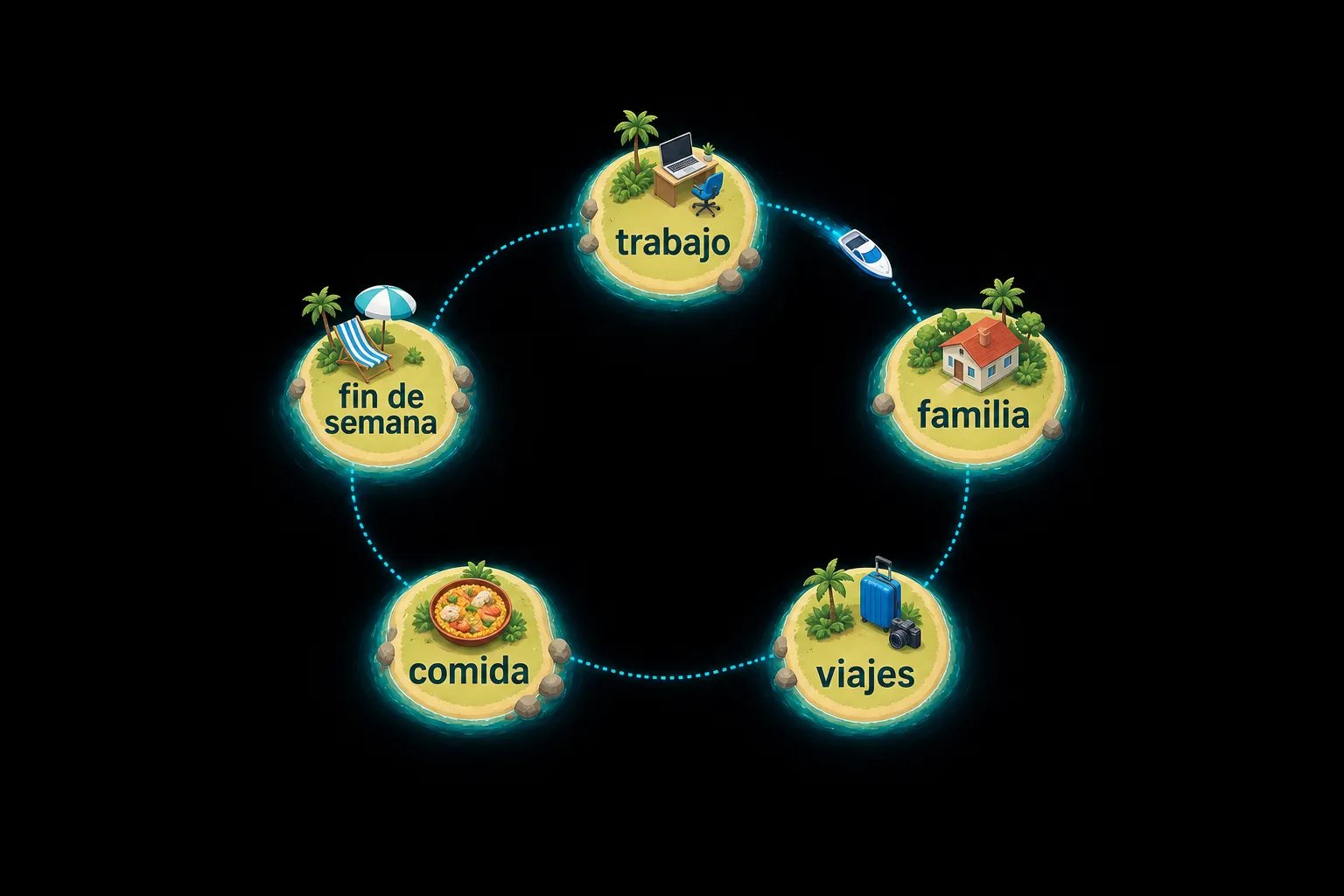
Pick topics that come up in the first ten minutes with any new person. These ten cover almost every small talk conversation you will have in Madrid or Medellín.
The 10 Spanish language islands
| Island | Opener in Spanish | Must include |
|---|---|---|
| Where you are from | Soy de..., una ciudad... (I'm from..., a city that is...) | One fact locals would not know |
| Your work or studies | Trabajo como... / Estudio... (I work as... / I study...) | One thing you like, one you don't |
| Your family | Tengo... hermanos. Mis padres viven en... (I have... siblings. My parents live in...) | One person described in two sentences |
| Why you learn Spanish | Aprendo español porque... (I learn Spanish because...) | A concrete goal, not just 'I like it' |
| Your daily routine | Normalmente me levanto a las... (Usually I get up at...) | Two time expressions |
| Weekends and hobbies | Los fines de semana suelo... (On weekends I usually...) | The verb 'soler' plus one opinion |
| Food you love and hate | Me encanta..., pero no soporto... (I love..., but I can't stand...) | One local dish you have tried |
| Travel: past and planned | El año pasado fui a... (Last year I went to...) | One past tense, one future plan |
| Your city or neighborhood | Vivo en un barrio que... (I live in a neighborhood that...) | One thing that annoys you about it |
| Your Spanish story | Empecé a estudiar español hace... (I started studying Spanish... ago) | Your funniest mistake |

Reading is step one. Speaking is what makes it stick.
Practice this in a real conversation, with instant feedback.
The 4-week plan at 20 minutes a day
You build two to three islands per week. Every island goes through the same five days, and the time budget is strict so it fits before work or on the bus.
| Day | Task | Minutes |
|---|---|---|
| 1 | Write the island in simple Spanish. Cut every sentence you could not explain. | 20 |
| 2 | Fix it. Paste it into a corrector or ask a tutor, then record yourself reading it. | 20 |
| 3 | Memorize by shadowing your own recording, walking around, no screen. | 20 |
| 4 | Use it live in a conversation, out loud, with a real reaction coming back. | 20 |
| 5 | Add the question back and one follow-up answer, then say the whole thing twice. | 15 |
Week 1: islands 1 to 3, the ones every stranger asks in the first two minutes. Week 2: islands 4 to 6. Start opening each session by saying week 1 islands out loud once. Week 3: islands 7 to 9. This week is about pressure, so day 4 gets the most attention. Week 4: island 10, then bridges. You spend half of every session linking islands together.
Day 4 is the day that matters
Writing and memorizing feel productive, but an island only exists once it survives a real listener who interrupts, mishears, or asks something off script. That is why day 4 is a conversation and not another recording session.
For this step I use Nativia. Its scenarios play a stranger at a party or a new colleague, and it asks the follow-up questions a person would actually ask. I say my island, it pushes back with ¿Y qué es lo que más te gusta de tu trabajo? (And what do you like most about your job?), and I find out fast which part of the island was never really mine. A language exchange partner works too, but you need someone available on day 4 every single week.
Watch out:
- An island you have only ever said to your mirror is a draft, not an island.
- If you cannot answer one follow-up question about it, shorten it until you can.
Bridges: how to get from one island to another
Recited islands sound robotic if you jump straight from one to the next. Bridges are two or three connector phrases that make the jump sound natural, and you learn them as a set in week 4.
Hablando de eso, yo... (Speaking of that, I...) Bueno, en mi caso es diferente porque... (Well, in my case it's different because...) Eso me recuerda a cuando... (That reminds me of when...) Justo por eso aprendo español. (That is exactly why I'm learning Spanish.)
The last one is my favorite. Almost any topic can be steered to island 4, and island 4 always ends in a question, so you are never stuck.
Test yourself
Check whether you would build your islands the way that actually works in conversation.
Pick the best option for each question, then check your answers.
1.Trabajo en un hospital. Me gusta los pacientes son muy amables.
I work in a hospital. I like it because the patients are very kind.
2.Which sentence belongs at the END of a good island?
3.Los fines de semana salir con amigos.
On weekends I usually go out with friends.
4.Your work island has 14 sentences and uses the subjunctive twice. What should you do?
5.A stranger says: Odio los lunes. Which bridge takes you to your work island?
Make speaking practice a daily habit
Nativia turns practice into an interactive story you'll want to come back to every day.
FAQ
How many islands do I need before I notice a difference?
Three. The first three cover where you are from, what you do, and why you learn Spanish, which is most of any first conversation. Most people feel the change in week one.
Isn't memorizing speeches the opposite of real fluency?
Memorizing is the scaffolding, not the building. Each island gets used and slightly changed in real conversations, and after a few weeks you stop reciting and start improvising around it. Native speakers do the same thing with their own stories.
Does the islands method work at A1?
Yes, and it works better at A1 than most methods because you write with the ten verbs you already have. Keep islands to five or six sentences at first, and grow them as your grammar grows.
Keep reading
Your First Spanish Conversation in 30 Days: A Daily Plan
A realistic 30 day plan to hold your first Spanish conversation: daily 30 minute steps, the right tools for each week, and what to skip entirely.
Shadowing: Fix Your Spanish Accent in 15 Minutes a Day
Learn the shadowing method for Spanish: a 15 minute daily routine that trains your accent, rhythm, and listening with real native audio. Step by step.
7 Ways You Sound Rude in Spanish Without Meaning To
Common Spanish politeness mistakes English speakers make: quiero, tú vs usted, lo siento, ¿qué? and more. Fix each one with a memory hook and a self-test.