Spain Slang: 12 Words You'll Hear Every Day in Madrid
Spain slang locals actually use: tío, vale, flipar, currar and 8 more, with real examples, a quiz and a free cheat sheet. Watch out for the coger trap.
Nativia Team
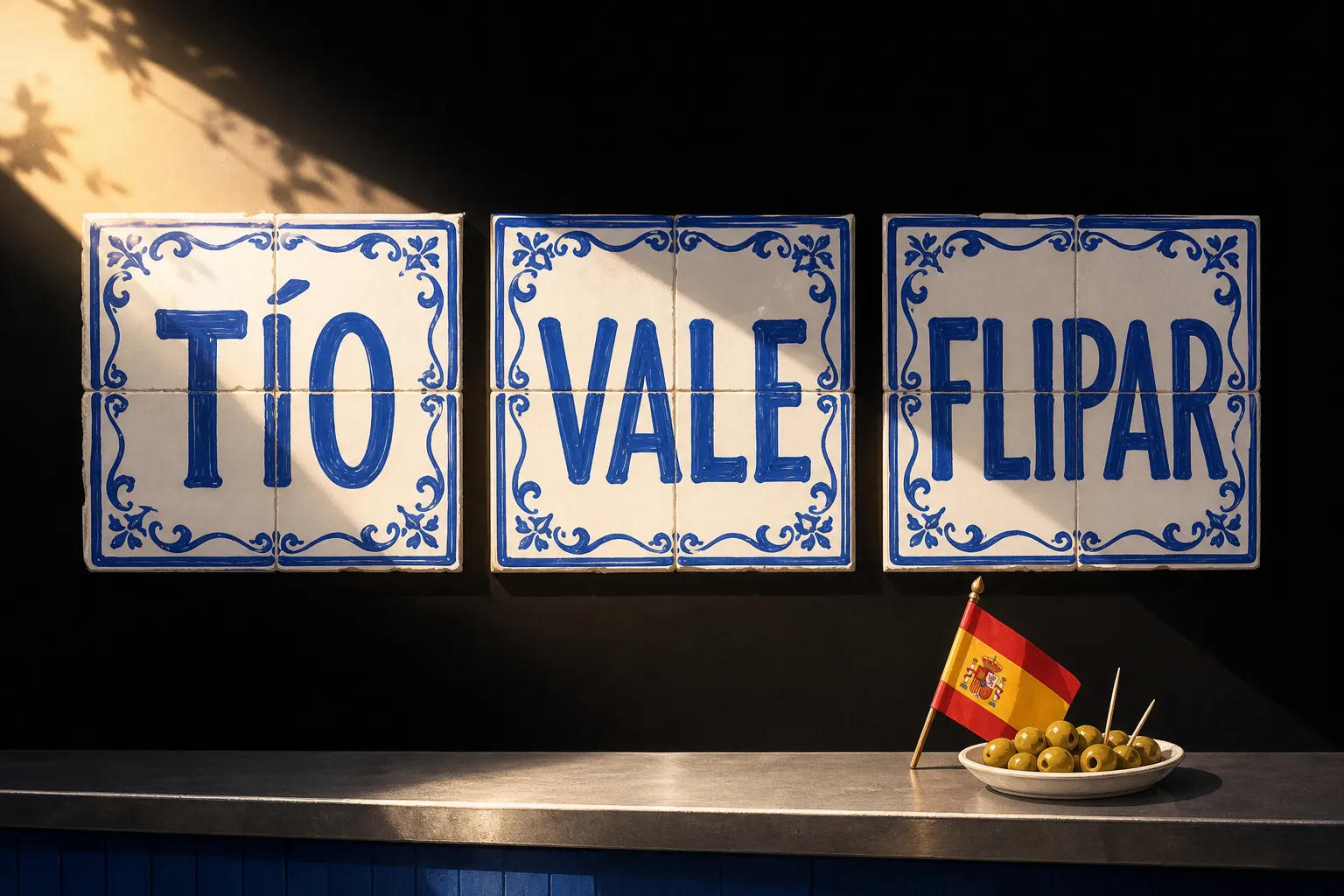
I landed in Madrid with a B1 certificate and understood about half of what my flatmates said. Not because of grammar. Because of tío, flipar and vale, three words no textbook had bothered to teach me. These are the 12 words that closed that gap, with where they are used and which ones will get you strange looks in Latin America.
Quiz ahead: At the end there is a six-question quiz on these words. The one about coger catches almost everyone.The words you will hear within an hour
1. Tío / tía
Literally uncle and aunt. In Spain it means dude, mate, or just "hey you", and everyone under 50 uses it.
Tío, ¿has visto esto? (Dude, have you seen this?)
Where: Spain only. In Mexico or Colombia it just means your uncle, so a stranger will look confused.
2. Vale
The Spanish "okay". You will hear it ten times per conversation, often doubled as vale, vale.
¿Quedamos a las nueve? Vale. (Meet at nine? Okay.)
Where: Spain. Latin America says dale, órale or listo instead.
3. Flipar
Borrowed from English "flip". To be amazed, shocked or blown away. Flipar en colores is the extreme version.
Flipé con el precio del alquiler. (I was blown away by the rent price.)
Where: Spain. The adjective flipante works the same way.
4. Currar
To work. El curro is your job. The word comes from caló, the language of the Spanish Roma.
Mañana curro hasta las ocho. (Tomorrow I work until eight.)
Where: Spain. In Argentina un curro is a scam, so keep it on this side of the Atlantic.
5. Pasta
Money. Not noodles, unless you are reading a menu.
No tengo pasta para salir este finde. (I don't have cash to go out this weekend.)
Where: Spain. Mexico says lana, most of Latin America says plata.
6. Colega
Standard meaning: colleague. In Spain: buddy or pal, often aimed at a stranger.
Perdona, colega, ¿tienes fuego? (Sorry mate, got a light?)
Where: Spain. In Latin America it stays formal, a person you work with.
Words for plans, people and disasters
7. Quedar
The standard verb means to remain or to fit. In Spain it is also the verb for meeting up with friends.
¿Quedamos el sábado? (Shall we meet up on Saturday?)
Where: Spain. Latin America prefers vernos or juntarnos.
8. Chaval / chavala
Kid, young person. Adults also use it for each other, like "guys".
Los chavales del barrio juegan ahí. (The kids from the neighborhood play there.)
Where: Spain. Mexico uses chavo / chava, close but not the same word.
9. Majo / maja
Nice, friendly, likeable. Sometimes good-looking. The safest compliment in Spain.
Tu compañera de piso es muy maja. (Your flatmate is really nice.)
Where: Spain, mostly the center and north. Latin Americans understand it but nobody says it.
10. Cutre
Shabby, tacky, cheap in a bad way. Works for a bar, a hotel or a plan.
El hostal era un poco cutre pero barato. (The hostel was a bit shabby but cheap.)
Where: Spain only. There is no clean equivalent elsewhere, which is why Spaniards abroad miss it.
11. Liarla
From liar, to wrap or tangle. To mess up or cause chaos. Liarla parda is a serious mess. Careful: liarse con alguien means to hook up with someone.
Anoche la liamos en el bar. (Last night we caused chaos at the bar.)
Where: Spain.
12. Coger
The standard verb for take, grab or catch. In Spain you coger el metro, coger un taxi and coger frío.
Cogemos el bus de las diez. (We'll take the ten o'clock bus.)
Where: Spain and Cuba use it freely. In Mexico, Argentina and most of Latin America it is a vulgar verb for sex.
Watch out:
- Coger is neutral in Spain and vulgar in Mexico and Argentina. Switch to tomar or agarrar across the Atlantic.
- Tío means dude only in Spain. Anywhere else you just called a stranger your uncle.
- Currar is honest work in Madrid and a con job in Buenos Aires.

Reading is step one. Speaking is what makes it stick.
Practice this in a real conversation, with instant feedback.
Test yourself
Read each line and pick what the slang word means or which word fits.
Pick the right option for each line, then check your answers.
1.Your flatmate says: Tío, flipé con la peli. What does flipé mean?
2.In Madrid a friend says: No tengo para el concierto.
I don't have money for the concert.
3.You are in Mexico City and want to say you will take the bus. Which verb is safe?
4.¿ el sábado para tomar algo?
Shall we meet up on Saturday for a drink?
5.A friend describes a bar as cutre. What is she saying?
6.Someone says: Anoche la liamos parda. What happened?
Cheat sheet
Spain slang at a glance
| Word | Meaning | Where | Watch out |
|---|---|---|---|
| tío / tía | dude, mate | Spain | Means uncle or aunt in Latin America |
| vale | okay | Spain | Latin America says dale, órale or listo |
| flipar | to be amazed, blown away | Spain | flipante is the adjective |
| currar | to work (el curro = job) | Spain | A scam in Argentina |
| pasta | money | Spain | lana in Mexico, plata elsewhere |
| colega | buddy, pal | Spain | Only a work colleague in Latin America |
| quedar | to meet up | Spain | Latin America uses vernos or juntarnos |
| chaval / chavala | kid, young person | Spain | Mexico says chavo / chava |
| majo / maja | nice, likeable | Spain, center and north | Understood but unused in Latin America |
| cutre | shabby, tacky | Spain | No equivalent elsewhere |
| liarla | to mess up, cause chaos | Spain | liarse con alguien means to hook up |
| coger | to take, grab, catch | Spain, Cuba | Vulgar in Mexico and Argentina, use tomar |
Learn how people actually talk
Textbooks won't teach you this. In Nativia, the characters speak with real accents and real slang. Start talking with them today.
FAQ
Will people in Latin America understand Spain slang?
Most of it, thanks to Spanish films and TV, but they will know instantly you learned in Spain. The real problem is the words that change meaning, especially coger and tío. Learn the local alternative before you fly.
Is vale too casual for work or with older people?
No. Vale is used in offices, shops and by grandparents. It is the neutral okay in Spain, not a teenage word.
Can I call an older person tío?
Better not. Tío is for friends, peers and strangers your own age. With someone older or in a formal setting, drop it and use their name or perdone.
Keep reading
Colombian Slang: 12 Words You'll Hear in Medellín and Bogotá
Learn 12 Colombian slang words locals actually use, from parce to guayabo, with real example lines, where each is used, a quiz and a free cheat sheet.
Argentinian Slang: 12 Words You'll Hear in Buenos Aires
Twelve Argentinian slang words with meanings, example lines and where they're used, plus the ones that change meaning outside Argentina.
How to Say Cool in Spanish: 10 Words Locals Actually Use
Learn how to say cool in Spanish like a local: guay, chido, chévere, bacán and copado, with real examples, country warnings, a quiz and a cheat sheet.