Colombian Slang: 12 Words You'll Hear in Medellín and Bogotá
Learn 12 Colombian slang words locals actually use, from parce to guayabo, with real example lines, where each is used, a quiz and a free cheat sheet.
Nativia Team
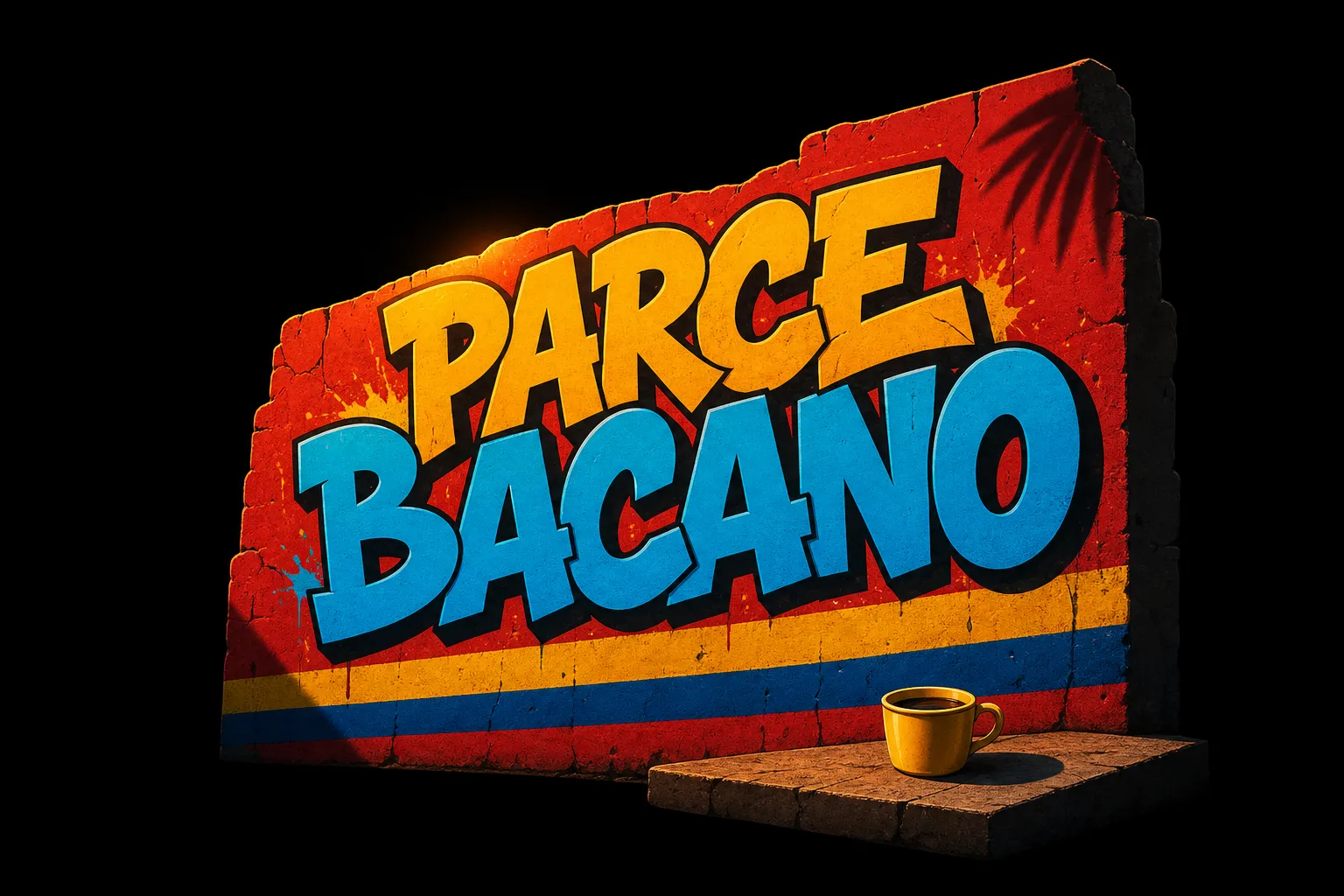
I landed in Medellín with two years of classroom Spanish and understood almost nothing for the first week. Not because people spoke fast. Because half the words were not in any textbook. A taxi driver called me parce, a waiter asked if I wanted a tinto, and I said no because I thought he meant wine at 9 a.m.
Colombians speak clearly, and the accent in Bogotá and Medellín is one of the easiest in Latin America. The slang is the wall you actually hit. These twelve words get you over it.
Quiz ahead: A short quiz at the end checks whether you can decode these words in real dialogue. Question 4 catches almost everyone who learned Spanish in Spain.Greetings and people
¿Qué más?
Literally "what else?", but it is the standard hello among friends. Nobody is asking you for more information.
¿Qué más, parce? ¿Todo bien? (What's up, man? All good?)
Used everywhere in Colombia. Answer with bien, ¿y vos? in Medellín, where vos replaces tú, or bien, ¿y tú? in Bogotá.
Parce / parcero
Friend, buddy, dude. This is the Colombian word. Say it once and people assume you have lived there.
Parcero, ¿vamos por una pola? (Buddy, shall we go for a beer?)
Strongest in Medellín and the Paisa region, understood nationwide. Do not use it in Mexico or Argentina, where it means nothing.
Parche
Your group of friends, or the plan you have with them. Being desparchado means bored with nothing to do.
Esta noche hay parche en la casa de Juli. (Tonight there's a hangout at Juli's place.)
Saying something is good, or very good
Bacano
Cool, great, nice. The safe, all-purpose compliment for things and people.
Ese barrio es muy bacano para vivir. (That neighbourhood is really cool to live in.)
Colombia, Panama, and parts of Venezuela. In Spain nobody will understand you.
Chévere
Also cool, a little softer than bacano. You will hear this across the whole Caribbean side of the Spanish-speaking world.
Tu apartamento está chévere. (Your apartment is nice.)
Colombia, Venezuela, Ecuador, Peru. It travels well.
Chimba
The dangerous one. Una chimba means something is amazing. Qué chimba means "how awesome". But the word is originally vulgar, and in the wrong tone it means rubbish or worse.
El concierto estuvo una chimba. (The concert was incredible.)
Watch out:
- Qué chimba with a smile means "awesome". Fine with friends, not with your host's grandmother.
- Qué chimbada or una chimbada means a piece of junk. Same root, opposite meaning.
- Outside Colombia, skip it entirely. In parts of Mexico it is an insult.
Berraco
Someone tough, hard-working, admirable. Also describes a hard situation. Spelled verraco in dictionaries, where it means a boar.
Mi mamá es una berraca, crió a cinco hijos sola. (My mum is a warrior, she raised five kids alone.)
Mostly Colombia. In Cuba it means an idiot, so be careful in Havana.

Reading is step one. Speaking is what makes it stick.
Practice this in a real conversation, with instant feedback.
Food, drinks and the morning after
Tinto
Black coffee, small and usually sweet. Not wine. Colombians drink it all day, and someone will offer you one within minutes of walking into an office.
¿Le provoca un tinto? (Would you like a black coffee?)
In Spain and Argentina tinto is red wine. Ordering one at breakfast in Madrid gets you a look.
Pola
Beer. The word comes from an old brand and stuck.
Nos tomamos unas polas viendo el partido. (We had a few beers watching the match.)
Colombia only. Elsewhere use cerveza or the local word, like chela in Mexico or caña in Spain.
Guayabo
Hangover. The morning after too many polas.
Tengo un guayabo terrible, no me hables duro. (I have a terrible hangover, don't talk loud.)
Colombia and parts of Venezuela. In Mexico it is a guava tree. Mexicans say cruda and Spaniards say resaca.
Everyday politeness
Qué pena
The Colombian "sorry" and "excuse me" rolled into one. Bumped into someone? Qué pena. Need to get past? Qué pena. Late? Qué pena con usted.
Qué pena, ¿me deja pasar? (Sorry, could you let me through?)
In Spain and Mexico qué pena means "what a shame", so a Spaniard hears it as pity, not an apology.
A la orden
"At your service." Shop owners say it as you walk in, as you pay, and as you leave. It also means "you're welcome".
Gracias. A la orden. (Thanks. You're welcome.)
Colombia, Ecuador, and parts of Central America. It is not sarcastic, just automatic.
Key takeaway:
- Parce, pola, tinto and qué pena are the four words that mark you as someone who has actually been to Colombia.
- Chimba is the highest reward and the highest risk. Hear it used ten times before you use it once.
Don't just memorize it. Say it out loud today.
Nativia turns what you just read into real conversations.
Test yourself
Read each line the way a Colombian would say it and pick what the slang word means.
Pick the meaning that fits the dialogue line, then check your answers.
1.A friend in Medellín says: ¿Qué más, parce? What are they doing?
2.Tengo un horrible después de la fiesta.
I have a horrible hangover after the party.
3.Your host says: El concierto estuvo una chimba. How was the concert?
4.A waiter in Bogotá asks: ¿Le provoca un tinto? What is he offering?
5.Someone squeezes past you on the bus and says: ¡Qué pena! In Colombia this means:
6.Vamos por unas esta noche.
Let's go for a few beers tonight.
Colombian slang cheat sheet
12 Colombian slang words at a glance
| Word | Meaning | Where it's used | Watch out |
|---|---|---|---|
| ¿Qué más? | What's up? (greeting) | All of Colombia | Not a real question |
| Parce / parcero | Friend, dude | Colombia, strongest in Medellín | Unknown in Mexico and Argentina |
| Parche | Friend group, hangout plan | All of Colombia | Desparchado = bored |
| Bacano | Cool, great | Colombia, Panama, Venezuela | Not understood in Spain |
| Chévere | Cool, nice | Colombia, Venezuela, Ecuador, Peru | Softer than bacano |
| Chimba | Amazing (or junk, by tone) | Colombia only | Vulgar root, insult in Mexico |
| Berraco | Tough, admirable, or a hard situation | Colombia | Means idiot in Cuba |
| Tinto | Black coffee | Colombia | Red wine in Spain and Argentina |
| Pola | Beer | Colombia only | Chela in Mexico, caña in Spain |
| Guayabo | Hangover | Colombia, Venezuela | Guava tree in Mexico |
| Qué pena | Sorry, excuse me | Colombia | Means what a shame in Spain and Mexico |
| A la orden | At your service, you're welcome | Colombia, Ecuador, Central America | Automatic, never sarcastic |
Learn how people actually talk
Textbooks won't teach you this. In Nativia, the characters speak with real accents and real slang. Start talking with them today.
FAQ
Is Colombian Spanish good for beginners?
Yes. Bogotá Spanish is often called one of the clearest accents in the Spanish-speaking world. The pronunciation is neutral and the pace is moderate. The slang above is the main thing that will surprise you.
Do Colombians use tú or usted?
Both, plus vos in Medellín. Bogotá leans heavily on usted, even between close friends and family. Using usted everywhere is never wrong, so default to it when unsure.
Can I use these words in other countries?
Chévere travels well across the Caribbean and Andes. Bacano works in Panama and Venezuela. The rest, especially parce, pola, tinto and qué pena, either mean nothing or mean something different once you cross the border.
Keep reading
Argentinian Slang: 12 Words You'll Hear in Buenos Aires
Twelve Argentinian slang words with meanings, example lines and where they're used, plus the ones that change meaning outside Argentina.
8 Spanish Mistakes That Instantly Mark You as a Beginner
Puedo tener un café, un otro, me gusta los tacos: 8 common Spanish mistakes that reveal you're a beginner, why they're wrong, and the fix for each.
How to Say Cool in Spanish: 10 Words Locals Actually Use
Learn how to say cool in Spanish like a local: guay, chido, chévere, bacán and copado, with real examples, country warnings, a quiz and a cheat sheet.