Argentine Slang: 12 Words You'll Hear Every Day in Buenos Aires
Learn Argentine slang the way porteños actually use it: che, boludo, quilombo, laburo and 8 more, with example lines, meanings and a free cheat sheet.
Nativia Team
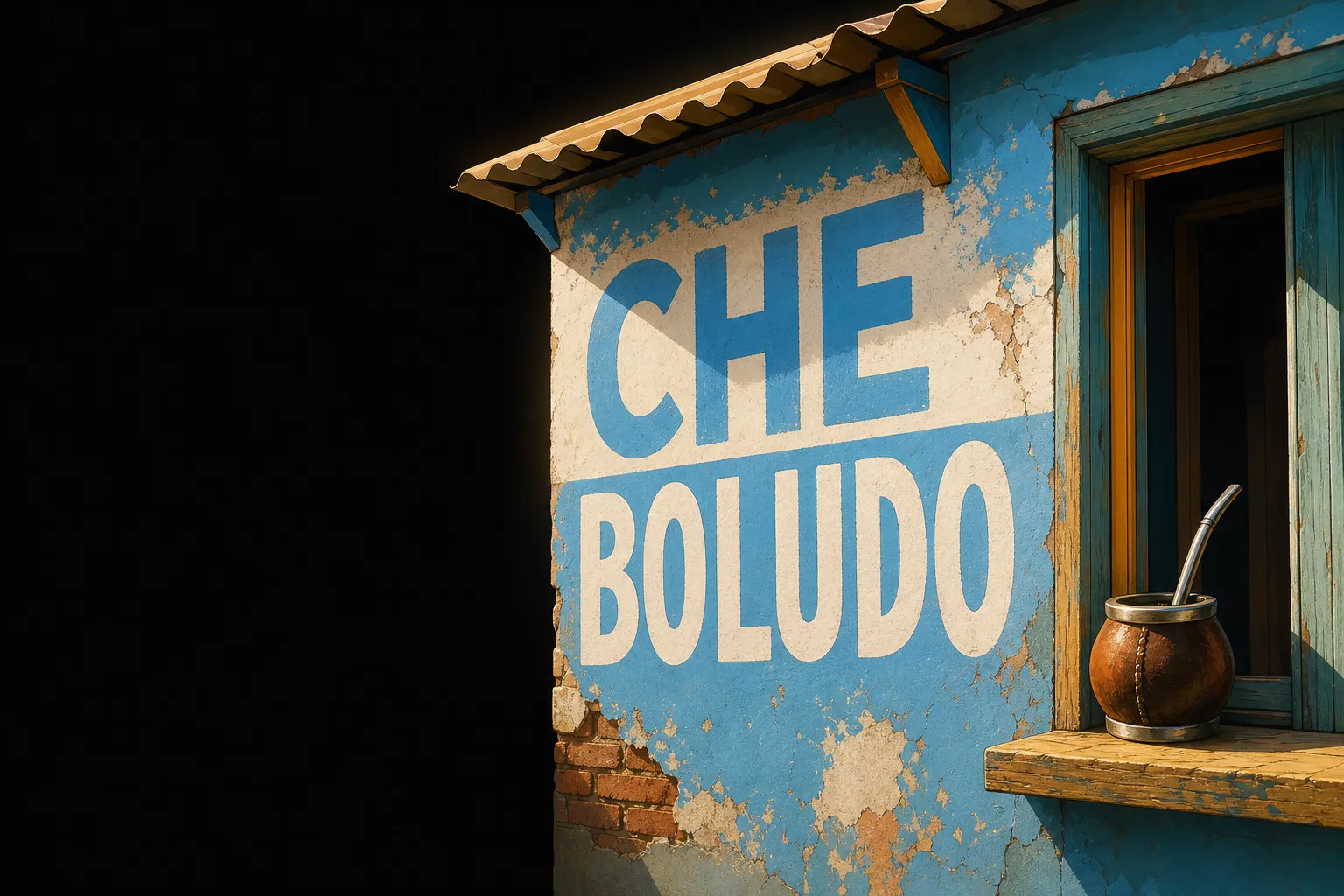
Nobody warns you about this before you land in Buenos Aires: your Spanish classes taught you tú, and every single person here says vos. Then a stranger calls you boludo in a friendly tone and you have no idea whether to laugh or leave.
Porteño Spanish is built on lunfardo, a street slang that grew out of Italian immigrant neighborhoods over a century ago. These 12 words are the ones you will hear within your first hour, on the bus, at the kiosco, and in every group chat.
Quiz ahead: A short quiz at the end checks whether you can decode real porteño lines. Question 4 catches almost everyone who has only studied Mexican or Spain Spanish.The three words you cannot survive without
Che
The most Argentine word there is. It means "hey" or "dude" and starts half the sentences in the country. It grabs attention, nothing more.
Che, ¿me pasás la sal? (Hey, can you pass me the salt?)
Used everywhere in Argentina and Uruguay. Spaniards and Mexicans know it only as the nickname of Che Guevara, who got it precisely because he said it all the time.
Boludo / boluda
Literally an insult meaning "idiot." Between friends it means "mate" or "dude" and carries zero offense. The tone and the relationship decide everything.
¿Qué hacés, boludo? Hace mil que no te veo. (What's up, dude? Haven't seen you in ages.)
Dale
Standard Spanish dale means "hit it" or "give it." In Argentina it is the universal "okay," "sure," "let's go," and "hurry up." You will say it a hundred times a day.
¿Nos vemos a las nueve? Dale. (See you at nine? Sure.)
Everyday life: work, money, chaos
Laburo
Work or job, straight from the Italian lavoro. The verb is laburar.
Mañana tengo laburo temprano, no puedo salir. (I've got work early tomorrow, I can't go out.)
Argentina and Uruguay only. In Mexico you would say chamba, in Spain curro.
Guita
Money. The standard word is dinero, but in Buenos Aires you will mostly hear guita or plata.
No tengo un mango de guita hasta el viernes. (I don't have a cent until Friday.)
Also understood in Spain as old-fashioned slang for cash, so it travels better than most lunfardo.
Quilombo
A mess, chaos, or a complicated situation. Originally a word for a brothel, now completely normal in casual speech, though still not for a job interview.
El subte está parado, es un quilombo llegar al centro. (The subway is down, getting downtown is a nightmare.)
Argentina, Uruguay and Paraguay. In Brazil the word refers to historical communities founded by escaped enslaved people, so do not use it casually across the border.
Bondi
The city bus, the colectivo. Porteños ride it daily and rarely call it anything else.
Tomate el bondi 60, te deja en la puerta. (Take the 60 bus, it drops you at the door.)
Chileans use micro instead, and in Bondi Beach, Australia, the word is just a coincidence.

Reading is step one. Speaking is what makes it stick.
Practice this in a real conversation, with instant feedback.
People and vibes
Pibe / piba
A kid, a young guy or girl, or simply a person around your age. Maradona was el pibe de oro, the golden boy.
Los pibes del laburo se juntan a comer una pizza. (The guys from work are meeting up for pizza.)
Argentina and Uruguay. In Spain piba also exists but sounds dated, and in parts of Mexico it is rare.
Mina
A woman, usually informal and slightly old-school. Younger porteños still use it, especially among guys.
La mina del kiosco siempre me fía el café. (The woman at the kiosk always lets me pay for coffee later.)
Common in Argentina, Uruguay and Chile. In standard Spanish mina is simply a mine, as in gold or coal.
Copado / copada
Cool, great, or nice, said of both people and things. The verb copar means to love something.
Tu primo es re copado, me cayó bárbaro. (Your cousin is really cool, I liked him a lot.)
Argentine speakers also put re in front of almost any adjective to mean "very." Re copado, re caro, re lindo. It is not a separate word so much as a reflex.
Talking and eating
Chamuyo
Smooth talk, a line, or straight-up nonsense meant to persuade. The verb chamuyar covers both flirting and bluffing your way through an exam.
No le creas nada, es puro chamuyo. (Don't believe a word, it's all sweet talk.)
Argentina and Uruguay. Elsewhere people will understand the vibe from context but will not use it themselves.
Morfar
To eat, usually with appetite. Related nouns: la morfi is food.
Tengo un hambre tremendo, vamos a morfar algo. (I'm starving, let's go eat something.)
Lunfardo through and through, from the Italian dialect word morfa, meaning mouth.
Key takeaway:
- Argentine slang leans heavily on Italian loanwords, so if you know any Italian, laburo and morfar will feel familiar.
- Tone carries meaning more than the word itself. Boludo and quilombo are warm between friends and rude everywhere else.
- Pair the slang with vos forms like hacés, tenés and querés, or it will sound like you learned it from a list.
Don't just memorize it. Say it out loud today.
Nativia turns what you just read into real conversations.
Self-test: can you decode these porteño lines?
Read each line as you would hear it on the street, pick the meaning, then check your answers.
Pick the meaning that matches what the speaker actually means.
1.A friend texts: Che boludo, ¿venís o no? What does boludo mean here?
2.Perdí el y llegué tarde al laburo.
I missed the bus and got to work late.
3.Your flatmate says: No tengo guita para salir. What is the problem?
4.You hear: Esa mina chamuya a todos los pibes del bar. What is she doing?
5.La fiesta fue un , llegó la policía dos veces.
The party was total chaos, the police came twice.
6.Someone asks ¿Vamos a morfar? and you want to say yes. What do you reply?
Argentine slang cheat sheet
12 Argentine slang words at a glance
| Word | Meaning | Example | Where it is used |
|---|---|---|---|
| che | hey, dude (attention grabber) | Che, ¿me pasás la sal? (Hey, can you pass me the salt?) | Argentina, Uruguay |
| boludo / boluda | dude among friends, idiot to strangers | ¿Qué hacés, boludo? (What's up, dude?) | Argentina, Uruguay |
| dale | okay, sure, let's go | ¿A las nueve? Dale. (At nine? Sure.) | Argentina, Uruguay, understood widely |
| laburo | work, job | Tengo laburo temprano. (I've got work early.) | Argentina, Uruguay |
| guita | money | No tengo guita. (I have no money.) | Argentina, Uruguay, old-fashioned in Spain |
| quilombo | mess, chaos | Es un quilombo llegar al centro. (Getting downtown is a nightmare.) | Argentina, Uruguay, Paraguay; different meaning in Brazil |
| bondi | city bus | Tomate el bondi 60. (Take the 60 bus.) | Argentina |
| pibe / piba | kid, young guy or girl | Los pibes del laburo. (The guys from work.) | Argentina, Uruguay |
| mina | woman (informal) | La mina del kiosco. (The woman at the kiosk.) | Argentina, Uruguay, Chile |
| copado / copada | cool, great | Tu primo es re copado. (Your cousin is really cool.) | Argentina, Uruguay |
| chamuyo | smooth talk, a line | Es puro chamuyo. (It's all sweet talk.) | Argentina, Uruguay |
| morfar | to eat | Vamos a morfar algo. (Let's go eat something.) | Argentina, Uruguay |
Learn how people actually talk
Textbooks won't teach you this. In Nativia, the characters speak with real accents and real slang. Start talking with them today.
FAQ
Is Argentine slang understood in the rest of Latin America?
Partly. Che and dale are recognized almost everywhere thanks to football and music. Words like laburo, bondi and chamuyo will get you blank stares in Mexico or Colombia, so switch to standard Spanish outside the Río de la Plata.
Can I use boludo with people I just met?
Not until they use it with you first. Among young people at a bar it can happen within an hour. With anyone older, in a shop, or at work, stick to che and their name.
What is lunfardo exactly?
Lunfardo is the slang that formed in Buenos Aires around 1880 to 1920, mixing Italian dialects, Spanish, and a few African and indigenous words. Tango lyrics are full of it, and many words like laburo, morfar and mina moved from the docks into everyday speech.
Keep reading
Colombian Slang: 12 Words You'll Hear Every Day in Medellín
Learn 12 Colombian slang words you'll hear daily in Medellín and Bogotá: parce, bacano, chimba, guayabo and more, with examples, meanings and a quiz.
Argentinian Slang: 12 Words You'll Hear in Buenos Aires
Twelve Argentinian slang words with meanings, example lines and where they're used, plus the ones that change meaning outside Argentina.
12 Mexican Slang Words You'll Actually Hear Every Day
Learn 12 Mexican slang words locals really use, from güey to ahorita, with real dialogue lines, cross-country warnings, and a quick self-test quiz.